
Choosing the right ev charging stations for your home or business can feel overwhelming with dozens of models, features, and technical specs to compare. This guide cuts through the noise, breaking down the essential factors, from charging speeds and connector compatibility to installation costs and smart energy management, so you can make an informed decision that fits your budget and driving habits. Whether you’re a first-time EV owner or upgrading your current setup, these comparisons will help you find the perfect charging solution.
Charging Speed & Power Levels
When comparing ev charging stations, understanding charging speed is crucial. The charging rate determines how quickly you can replenish your battery and get back on the road. EV charging stations are categorized into three distinct levels based on their power output, each serving different needs and use cases.
Level 1 Charging: The Standard Wall Outlet
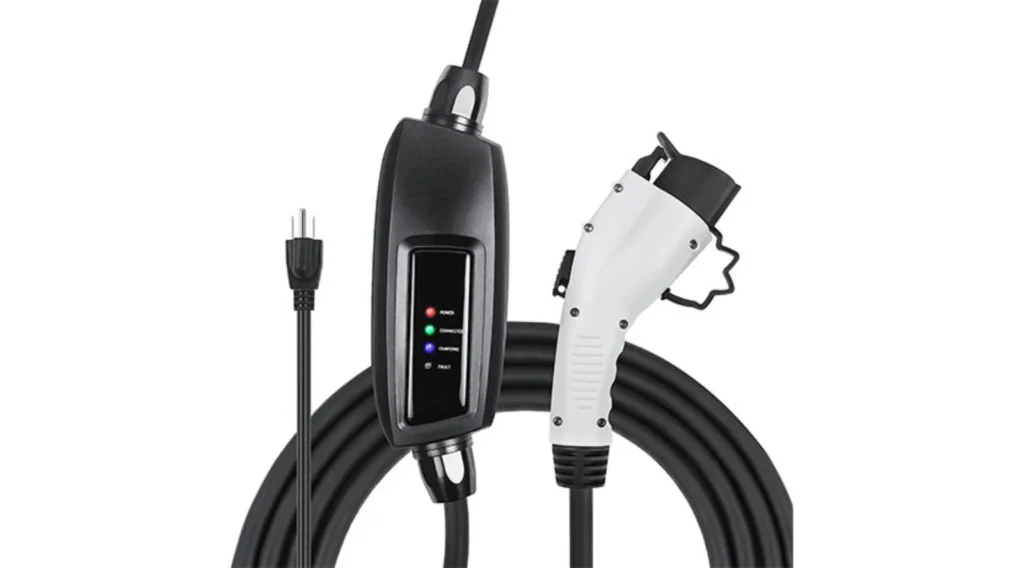
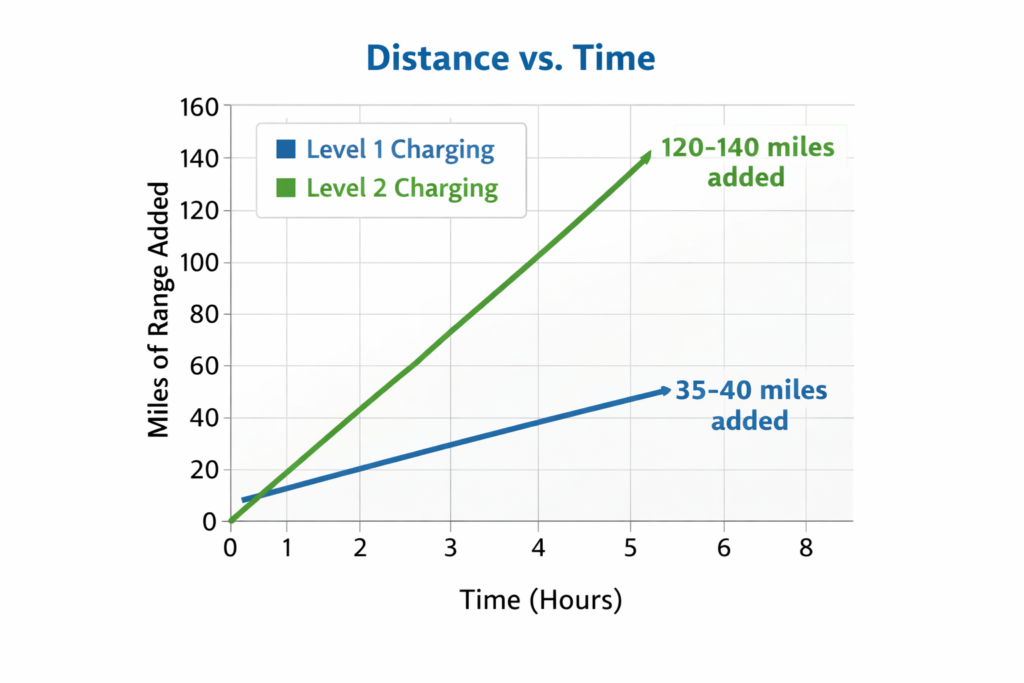
Level 1 ev charging stations operate on standard 120-volt household outlets, delivering 1.4 to 1.9 kW of power. This is the slowest charging method, typically adding 3-5 miles of range per hour. A full charge for an average EV can take 24-40 hours. While painfully slow for daily drivers, Level 1 ev charging stations require no special installation, just a grounded three-prong outlet. For those needing occasional portable charging, Lectron offers compact Level 1 options that work with any standard outlet, making them suitable for plug-in hybrid owners or EV drivers with very short commutes who can charge overnight and throughout the weekend.
Level 2 Charging: The Home and Public Standard
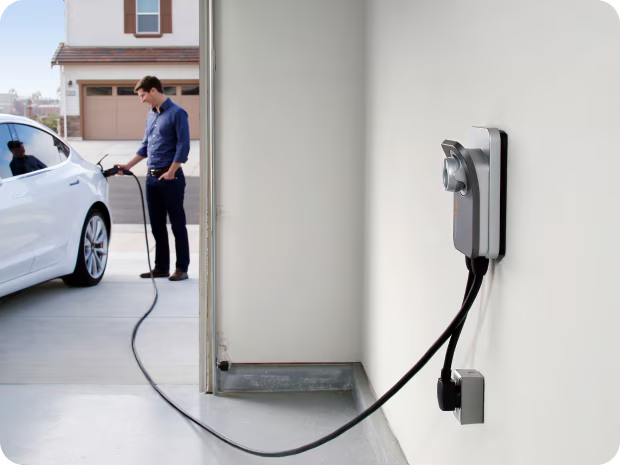
Level 2 ev charging stations are the most common for home installation and public destinations. They run on 240-volt circuits (similar to electric dryers) and deliver 3.6 to 19.2 kW of power, though most residential units provide 7.6-11.5 kW. This translates to 12-80 miles of range per hour, with most EVs fully charging in 4-10 hours. Brands like Emporia Power and Lectron have become popular choices for Level 2 ev charging stations, offering smart features that help you monitor energy usage and control charging schedules through mobile apps. EVIQO also provides reliable Level 2 solutions designed for straightforward home installation. These ev charging stations strike the ideal balance between charging speed and installation cost for overnight charging at home or extended stays at workplaces, malls, and hotels.
DC Fast Charging: Road Trip Essential
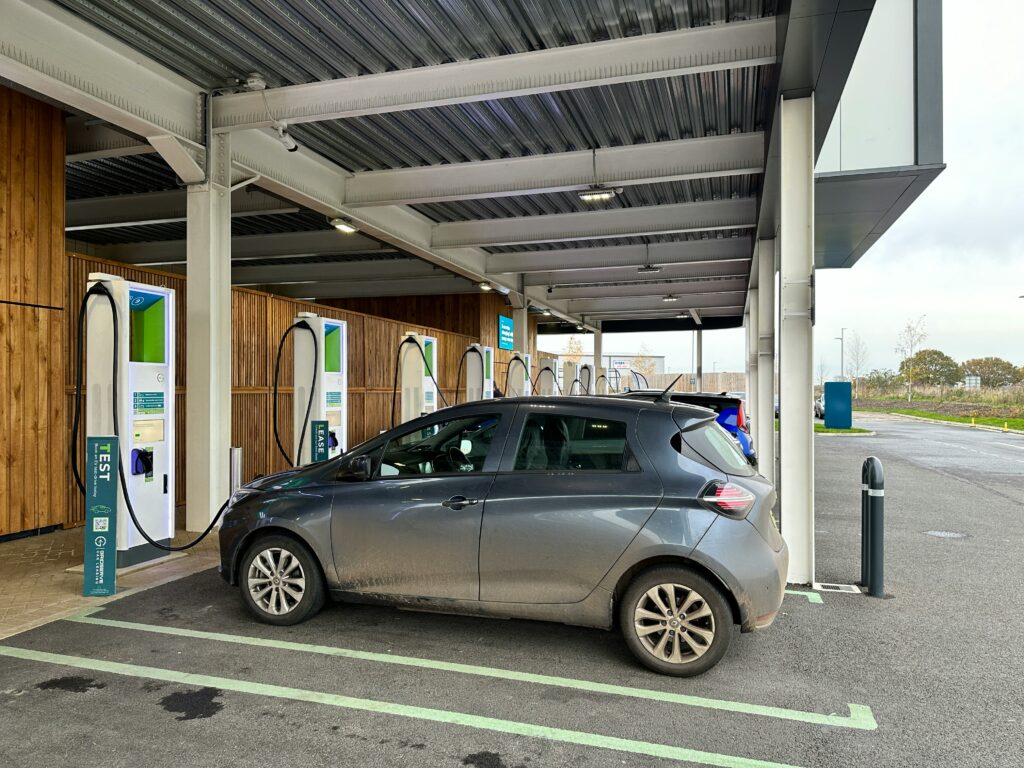
DC fast charging ev charging stations, sometimes called Level 3, bypass your vehicle’s onboard charger and deliver DC power directly to the battery. These powerful ev charging stations operate at 400-900 volts, delivering 50-350 kW of power. The result: 60-200 miles of range in just 20 minutes. However, frequent DC fast charging can accelerate battery degradation, and installation costs make them impractical for home use. While residential brands like Lectron and Emporia Power focus on Level 2 solutions for home use, companies like EV Bandit offer adapters and accessories that can help you make the most of public DC fast charging networks during road trips. These ev charging stations are strategically located along highways for long-distance travel.
Power Output: What the Numbers Mean
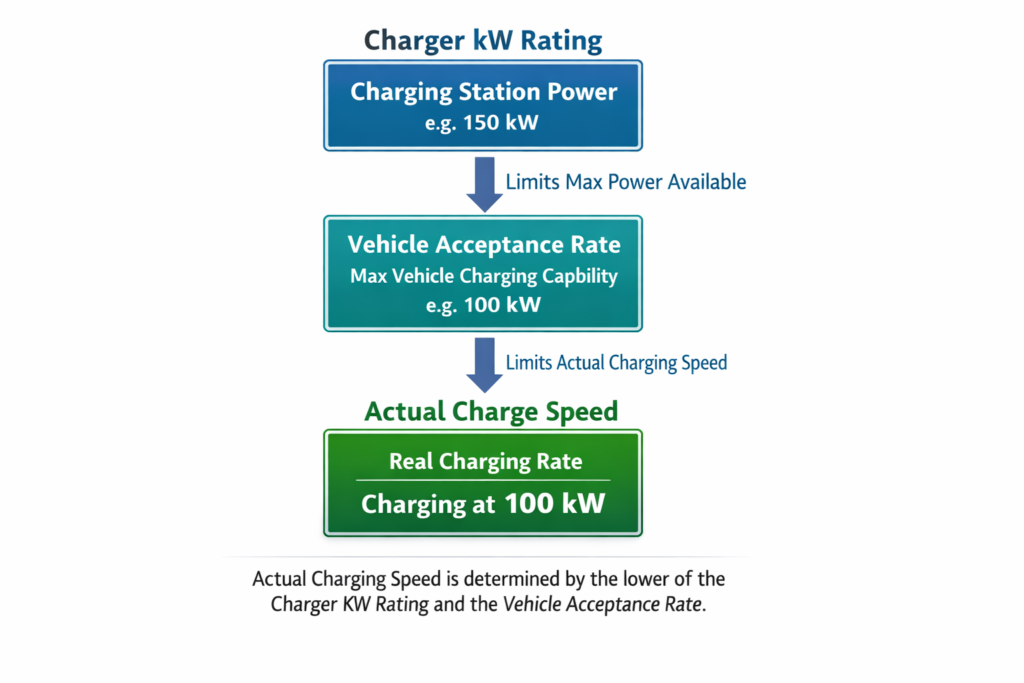
The “kW” rating on ev charging stations indicates energy transfer speed. Higher kW means faster charging, but your EV’s onboard charger limits the maximum rate it can accept. For example, connecting a car with a 7.7 kW onboard charger to a 19.2 kW Level 2 station won’t charge faster than 7.7 kW. EVIQO and Lectron clearly label their ev charging stations with kW ratings, making it easy to match their output to your vehicle’s capabilities. Always match the ev charging stations’s output to your vehicle’s acceptance rate for optimal value—there’s no benefit in paying for more power than your car can use.
Choosing the Right Speed for Your Needs
Selecting from the many available ev charging stations can be overwhelming, but the right choice depends entirely on your daily driving habits and your home’s electrical capacity. By matching the charging speed to your lifestyle, you ensure that your vehicle is always ready when you are, without overspending on unnecessary power.
Evaluating Your Daily Commute
The first step in choosing between ev charging stations is calculating your “daily replenishment” needs. If you drive fewer than 30 miles per day, a Level 1 charger—like the portable options from Lectron—might suffice by charging your car overnight. However, for the average American commute or for drivers of long-range SUVs, a Level 2 station is almost always the better investment. High-quality Level 2 ev charging stations from Emporia Power or EVIQO provide enough speed to fully recover hundreds of miles of range while you sleep, ensuring you never leave home with “range anxiety.”
Home vs. Public Charging Balance
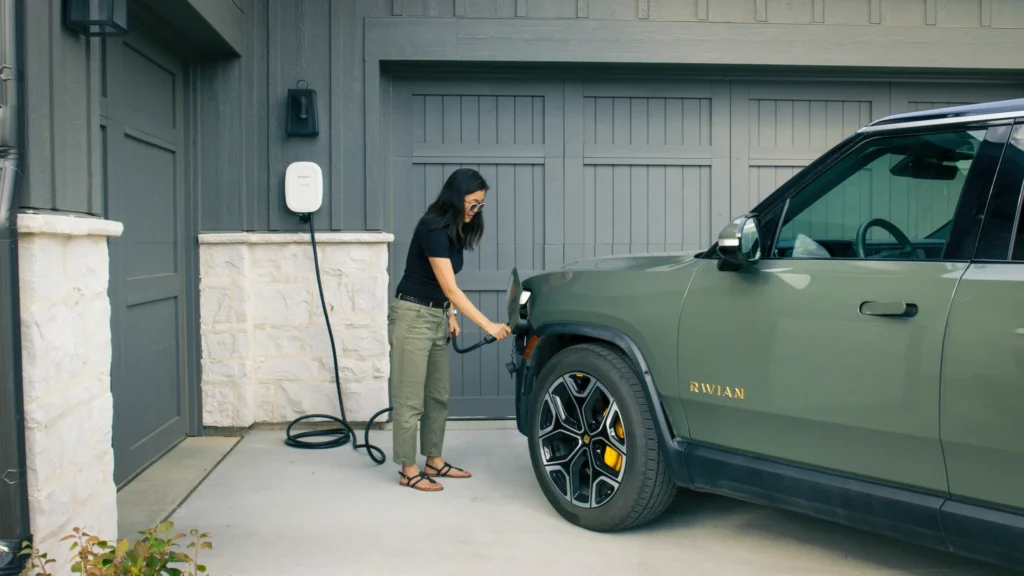
When shopping for home ev charging stations, you don’t necessarily need the fastest speed available on the market. While public DC fast chargers are essential for road trips, they are overkill (and expensive to install) for residential use. A mid-range Level 2 station (operating at 32 to 40 amps) is the “sweet spot” for most homes. Lectron and EVIQO offer versatile units that balance fast home charging with affordable installation costs. If you frequently use public chargers, consider carrying adapters from EV Bandit to ensure your car can connect to various station types.
Future-Proofing Your Investment
If you plan on owning your EV for many years—or eventually adding a second electric vehicle to your household, it is wise to choose ev charging stations with higher power ceilings. Even if your current car only accepts 7.6 kW, purchasing a 48-amp or 11.5 kW station from Emporia Power ensures you won’t need to upgrade your hardware when you buy a more advanced vehicle in the future
Safety at High Speeds
The faster the charging speed, the more heat and energy flow through the system. Safety is paramount when dealing with high-powered ev charging stations. This is where EVject comes in; their specialized safety connectors are designed to protect your vehicle’s charging port and the station’s cable in emergency situations. Additionally, using high-quality cable management tools from EV Bandit keeps your heavy Level 2 cables off the ground, preventing wear and tear that can lead to slower charging or safety hazards.
The “Time-of-Use” Factor
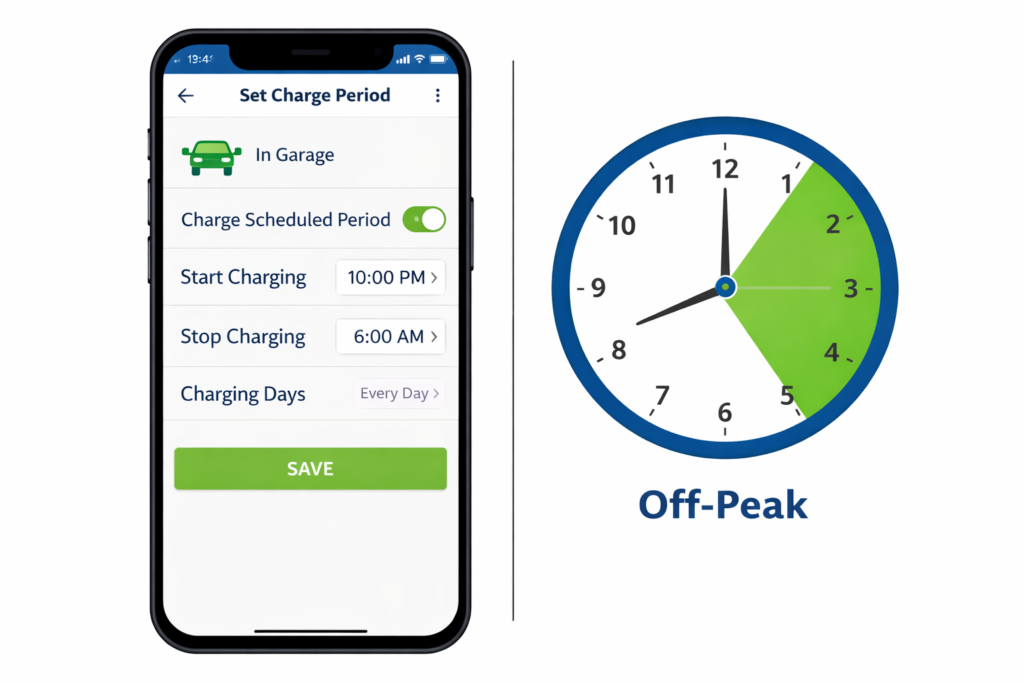
Speed isn’t just about how fast the car charges, but when it charges. Smart ev charging stations allow you to schedule charging during off-peak hours when electricity is cheapest. Emporia Power and EVIQO both feature robust apps that let you prioritize cost-savings without sacrificing the speed you need to get to work the next morning.
Connector Type Compatibility
Not all ev charging stations use the same plug, and connecting the wrong connector to your vehicle is like trying to fit a USB-C cable into a Lightning port, it simply won’t work. Understanding which connector types your car supports is essential before purchasing any ev charging stations or accessories.
The J1772 Standard (Level 1 & 2 AC Charging)
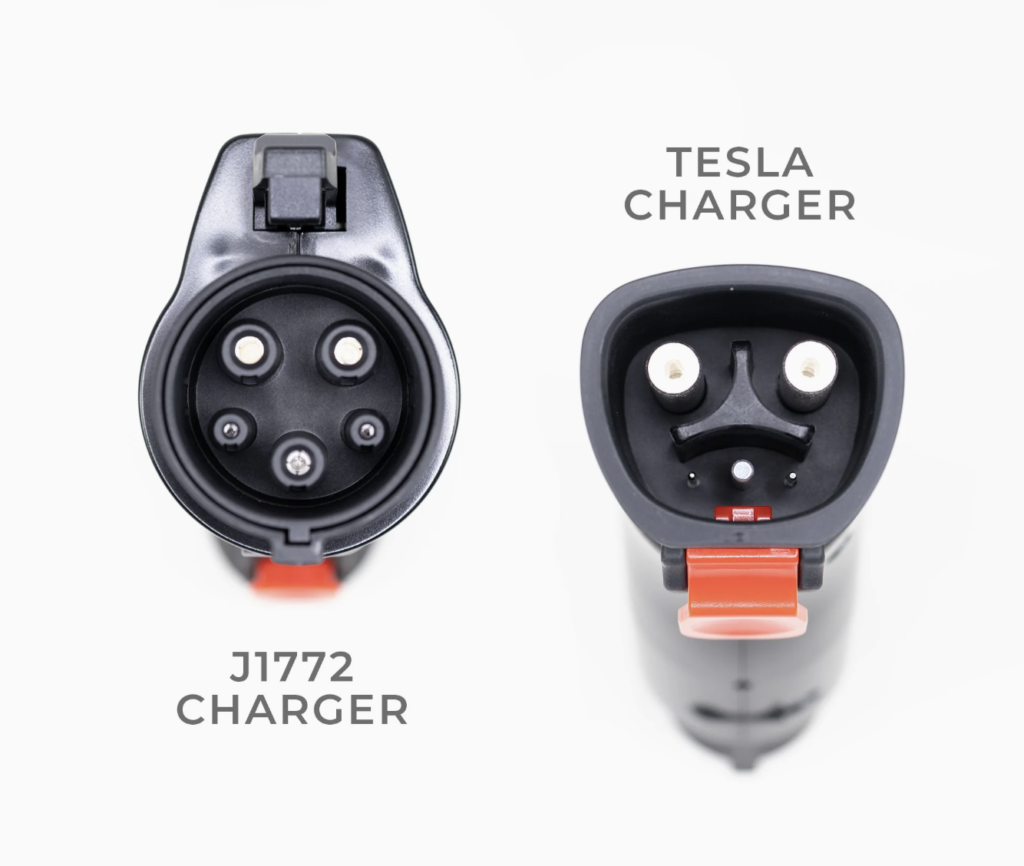
The J1772 connector is the universal standard for Level 1 and Level 2 AC charging in North America. Every non-Tesla EV sold in the U.S. uses this connector, and Tesla vehicles can charge at J1772 ev charging stations using a simple adapter. When shopping for home ev charging stations, brands like Emporia Power, Lectron, and EVIQO all ship with J1772 connectors, ensuring compatibility with virtually any electric vehicle on the road. If you own a Tesla, Lectron and EV Bandit both offer affordable J1772-to-Tesla adapters that let you tap into the vast network of non-Tesla Level 2 ev charging stations at workplaces, hotels, and shopping centers.
CCS: The Fast Charging Standard (DC Fast Charging)
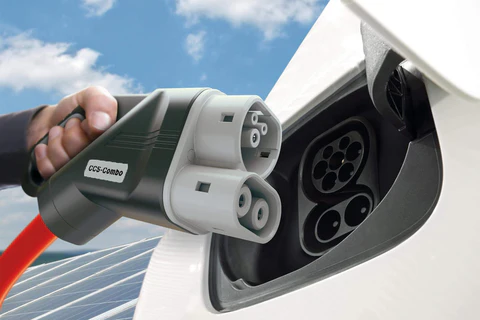
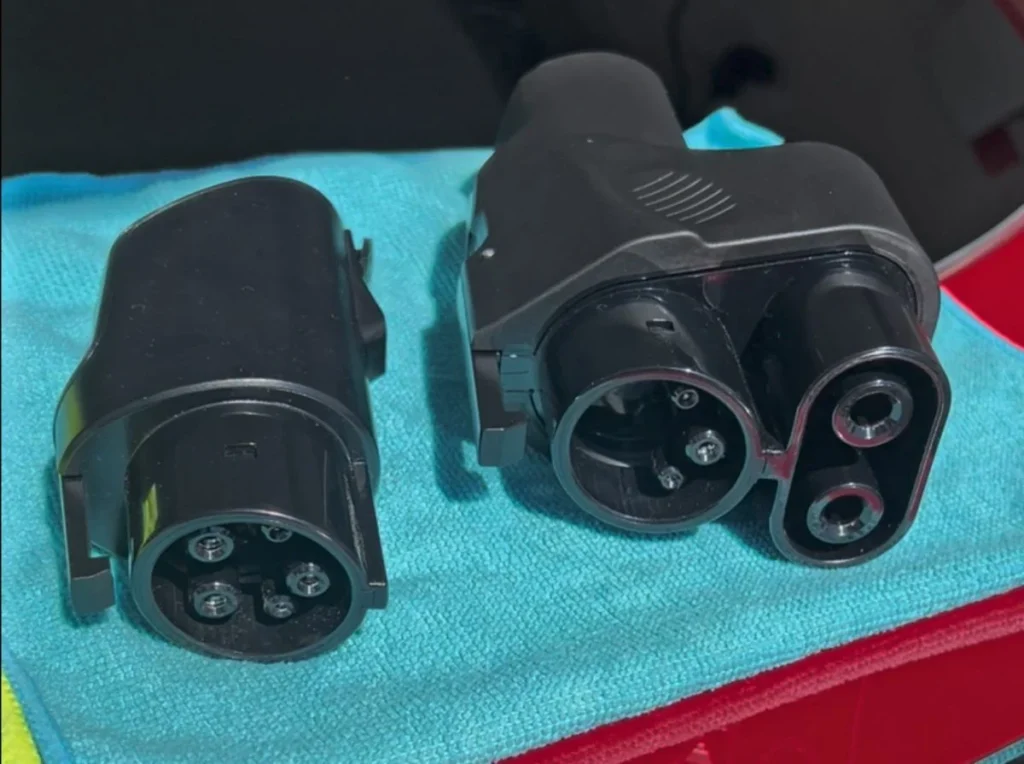
For DC fast charging, the Combined Charging System (CCS) is the dominant standard for non-Tesla EVs. CCS adds two DC power pins below the standard J1772 plug, creating a single connector that handles both AC and DC charging. Most public fast-charging ev charging stations—like those from Electrify America, EVgo, and ChargePoint—use CCS connectors. Tesla has begun adding CCS compatibility to its Supercharger network, and many new EVs come with CCS ports. If you drive a Tesla Model S/X/3/Y, EV Bandit and Lectron sell CCS-to-Tesla adapters, allowing you to access thousands of additional fast-charging ev charging stations during long road trips.
CHAdeMO: The Legacy Standard
CHAdeMO is an older DC fast-charging standard primarily used by the Nissan Leaf and a few other Japanese EVs. While CHAdeMO ev charging stations still exist, the standard is being phased out in North America. Most new public charging installations prioritize CCS. If you drive a CHAdeMO-equipped vehicle, carry a CHAdeMO-to-CCS adapter from Lectron or EV Bandit to ensure you can charge at the growing number of CCS-only ev charging stations. This adapter is a small investment that prevents being stranded on road trips.
NACS (North American Charging Standard) / Tesla Connector
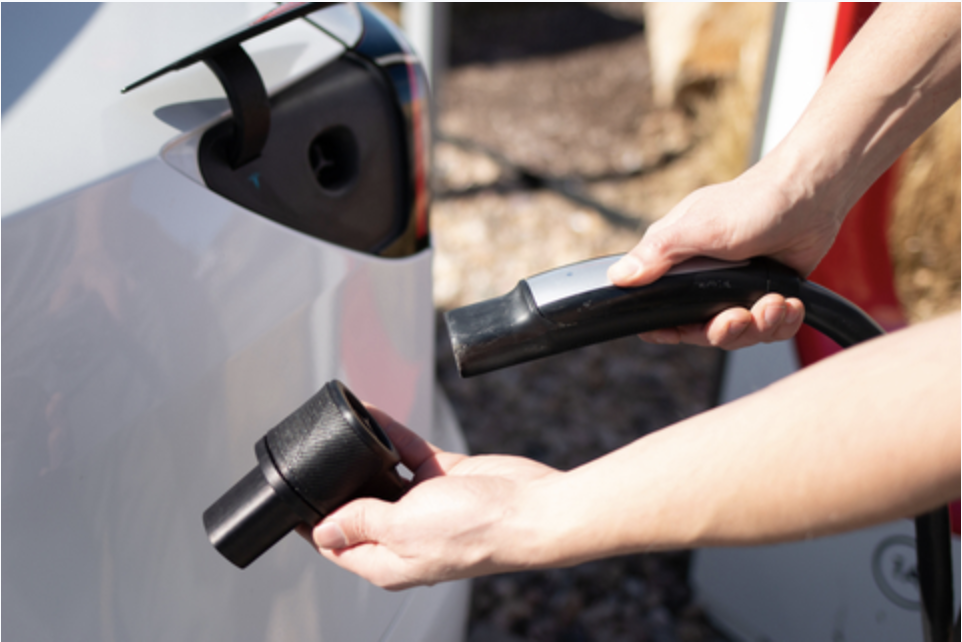
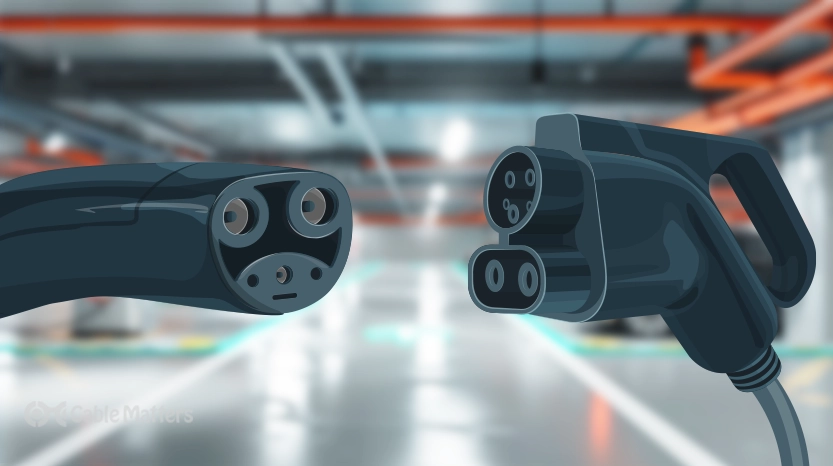
Tesla’s proprietary connector, recently rebranded as the North American Charging Standard (NACS), is smaller and lighter than J1772 or CCS. Tesla vehicles use NACS for both AC and DC charging at Tesla Superchargers and Destination Chargers. Major automakers (Ford, GM, Rivian, Volvo, etc.) have announced plans to adopt NACS starting in 2025, meaning future non-Tesla EVs will have NACS ports. In the meantime, ev charging stations with NACS connectors are still primarily Tesla-exclusive. To bridge this gap, EVIQO and Lectron offer high-quality NACS-to-J1772 adapters, allowing non-Tesla EVs to use Tesla Destination Chargers (though not Superchargers yet).
Adapters: The Key to Universal Charging
The connector landscape is fragmented, but adapters solve most compatibility issues. Whether you need a J1772-to-Tesla adapter for home ev charging stations or a CCS-to-Tesla adapter for road trips, companies like Lectron, EV Bandit, and EVIQO produce certified adapters that meet safety standards. For added safety when using adapters, EVject offers emergency disconnect solutions that protect both your vehicle and the charging equipment from damage if the cable is accidentally pulled or tampered with.
What to Check Before You Buy
Before investing in home ev charging stations, verify your vehicle’s charging port. Check the owner’s manual or look at the charge port door—most EVs label the connector type. Then, choose ev charging stations and adapters that match. For maximum flexibility, a J1772 Level 2 station from Emporia Power or Lectron paired with the appropriate adapters ensures you can charge at home and take advantage of the broader public charging network.
Installation Requirements
Installing ev charging stations is not as simple as plugging in a toaster. Your home’s electrical infrastructure must support the continuous high-power draw that charging demands. Understanding these requirements before purchasing ev charging stations prevents costly surprises and ensures a safe, code-compliant setup.
Electrical Panel Capacity: The First Hurdle
Your main electrical panel is the gatekeeper. Most Level 2 ev charging stations require a dedicated 240-volt circuit, similar to an electric dryer or oven. A 32-amp station (7.7 kW) needs a 40-amp circuit breaker, while a 48-amp unit (11.5 kW) requires a 60-amp breaker. Before buying ev charging stations, check your panel’s amperage rating—most older homes have 100-amp service, while newer homes have 200 amps. If your panel is already near capacity, you may need a service upgrade. Brands like Emporia Power offer smart ev charging stations with adjustable amperage settings, allowing you to start at a lower power level and increase output later if you upgrade your electrical service.
Hardwired vs. Plug-In: Two Installation Paths
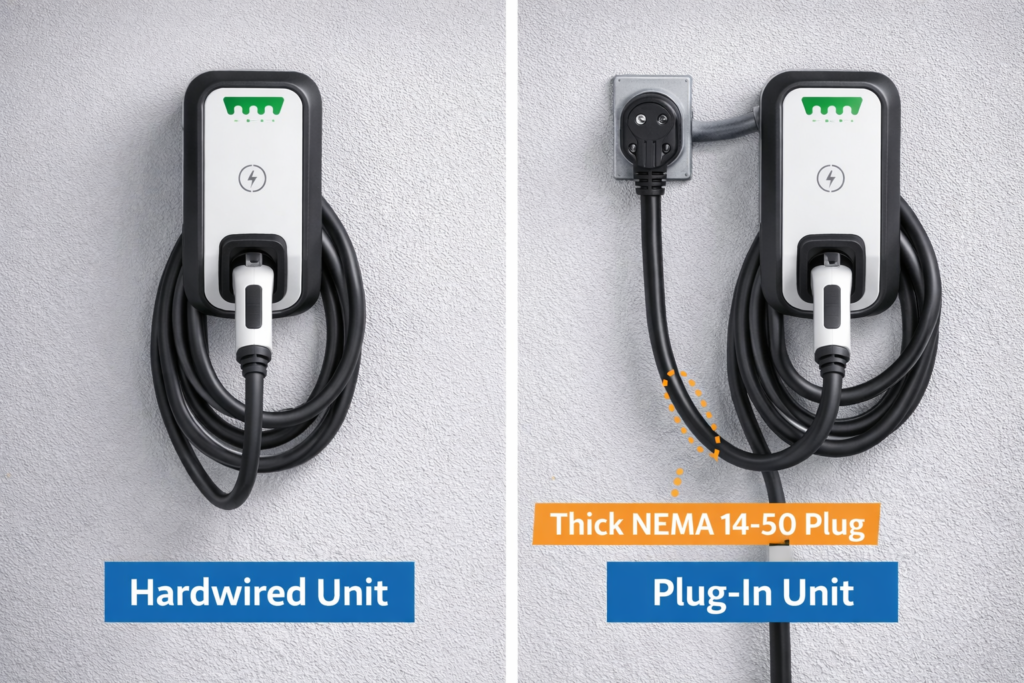
Level 2 ev charging stations come in two forms: hardwired units that connect directly to your home’s wiring, and plug-in models that use a heavy-duty outlet. Hardwired ev charging stations offer a cleaner look and are required for units above 40 amps, but they must be installed by an electrician and are less portable. Plug-in ev charging stations, such as those from Lectron and EVIQO, use a NEMA 14-50 or NEMA 6-50 outlet—the same type used for RVs and welding equipment. This setup allows you to unplug the station and take it with you if you move, and the outlet can be installed by an electrician as a standalone project before you purchase the charger.
Outlet Types and What They Mean
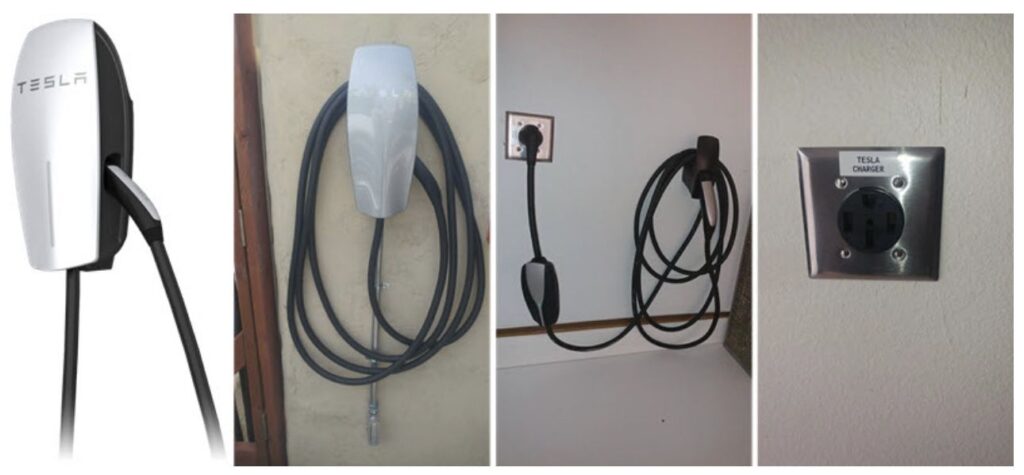
If you choose a plug-in route, you’ll encounter NEMA outlets. The NEMA 14-50 is the most common for ev charging stations—it’s a four-prong outlet that provides both 120V and 240V power. The NEMA 6-50 is a three-prong variant that only provides 240V but is equally capable for charging. Before installation, confirm which plug type your chosen ev charging stations require. Lectron and EVIQO clearly specify outlet requirements in their product descriptions, and EV Bandit offers adapter cables if you need to convert between outlet types temporarily.
Distance from Electrical Panel: The Longer the Run, the Higher the Cost
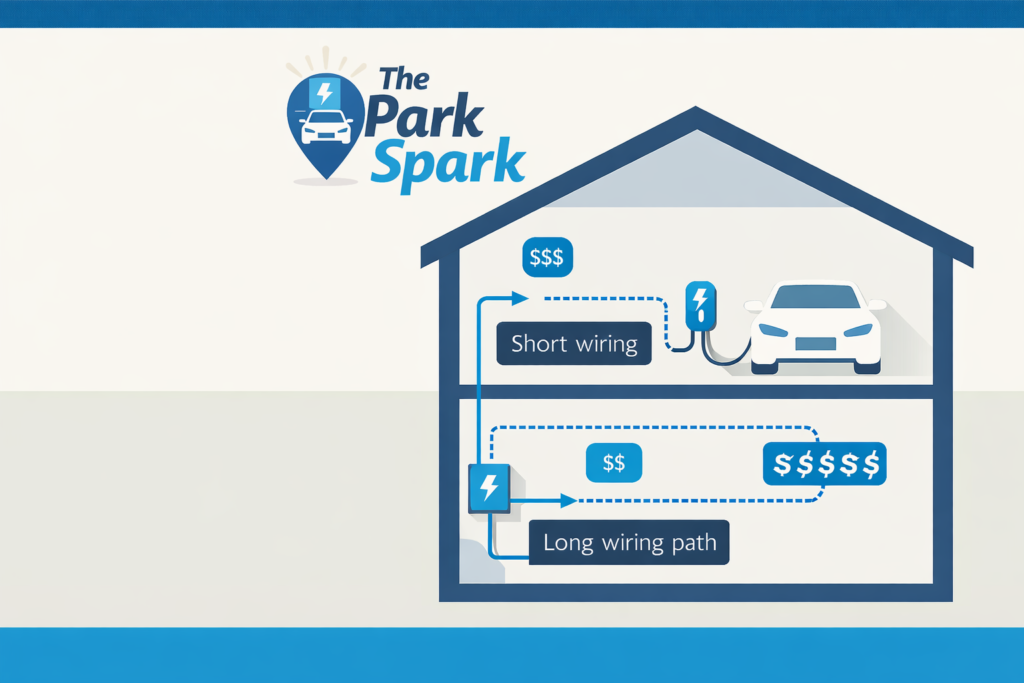
The distance between your electrical panel and the installation location directly impacts installation cost. Copper wiring for 240V circuits is expensive, and long runs require thicker gauge wire to prevent voltage drop. If your garage is 100 feet from your panel, expect to pay significantly more than if it’s mounted on the other side of the wall. When scouting locations for ev charging stations, choose the shortest possible path to your panel. EV Bandit offers cable management systems that help route wires cleanly along walls and ceilings, minimizing visual clutter if a long run is unavoidable.
Indoor vs. Outdoor Installation
Not all ev charging stations are built for outdoor exposure. If you plan to install outside—perhaps on an exterior garage wall or driveway pedestal—verify the station’s NEMA rating. An IP65 or IP67 rating ensures protection against rain and dust. EVIQO and Emporia Power both manufacture weather-resistant ev charging stations rated for outdoor use. Outdoor installations also require a NEMA 4-rated enclosure for any junction boxes and specialized conduit to protect wiring. If you live in a region with extreme temperatures, look for ev charging stations with thermal management features, as charging speeds can derate in very hot or cold conditions.
Unit Cost & Installation Pricing
Understanding the full cost of ev charging stations requires looking beyond the sticker price. The total investment includes the equipment, installation labor, electrical upgrades, and necessary accessories. Here’s a clear breakdown to help you budget accurately.
Equipment Costs: What You’ll Pay for the Station Itself
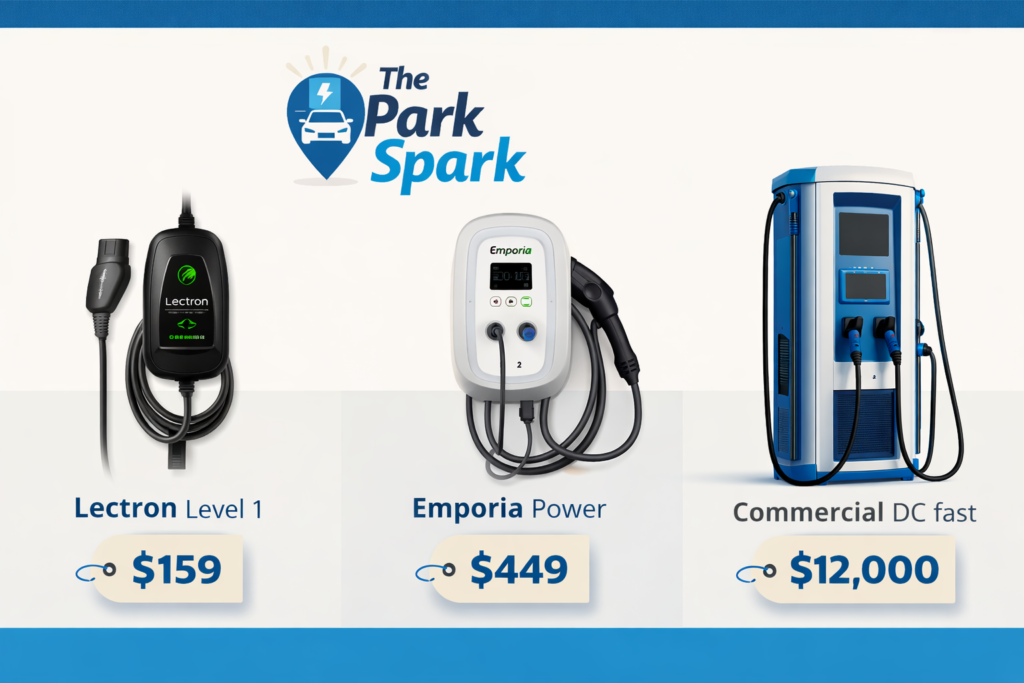
Level 1 portable ev charging stations are the most affordable, typically costing 200–400. Brands like Lectron offer reliable portable units in this range that plug into any standard outlet, making them ideal for occasional use or as a backup charger. Level 2 ev charging stations—the most popular for home installation—range from 300to900 depending on features. Emporia Power and EVIQO both deliver feature-rich Level 2 chargers with Wi-Fi connectivity and energy monitoring for under 600,offeringexcellentvaluecomparedtopremiumbrandsthatcharge700–900forsimilarspecs.DCfastcharging∗∗evchargingstations∗∗areprohibitivelyexpensiveforhomeuse,withhardwarealonecosting10,000–$50,000, which is why they are limited to commercial installations.
Installation Labor: The Variable That Drives Cost
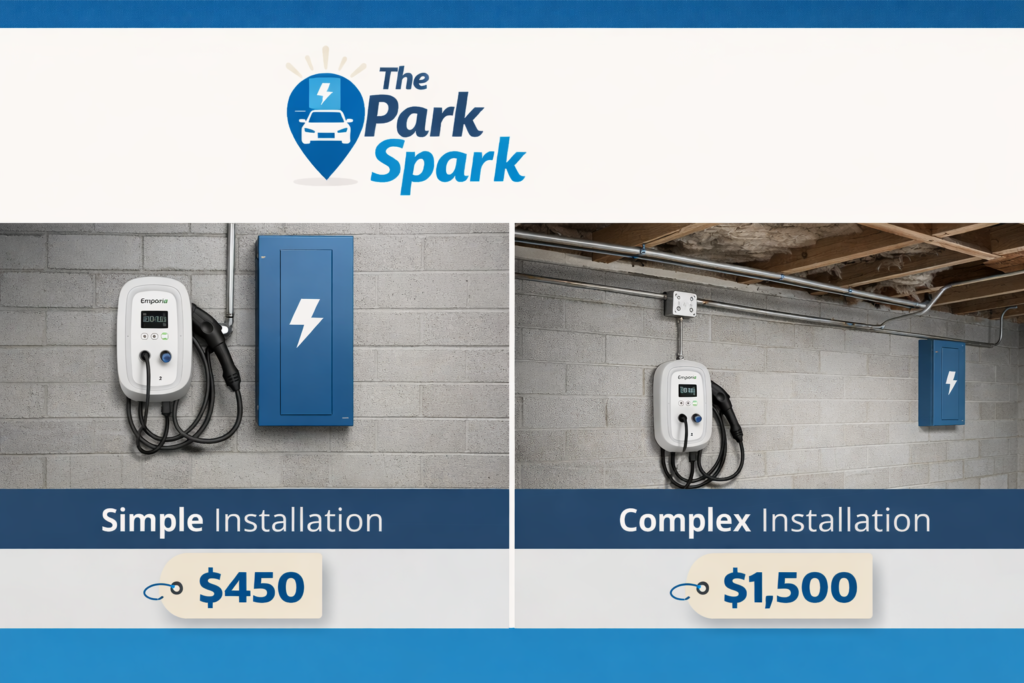
Installation is where costs can swing dramatically. A simple plug-in Level 2 station mounted next to your electrical panel might cost 300–600 in electrician labor. However, if your garage is far from the panel or you need a hardwired unit, labor can exceed $1,500. Complex jobs involving drywall cutting, trenching to an exterior location, or running conduit through attics push costs higher. EV Bandit offers cable management kits that can reduce installation time (and labor costs) by providing pre-configured conduit and mounting hardware. Always get three quotes from licensed electricians before committing to ev charging stations that require extensive wiring.
Electrical Upgrades: The Hidden Expense
Many homes—especially those built before 2000—need electrical panel upgrades to support Level 2 ev charging stations. Upgrading from 100-amp to 200-amp service typically costs 1,500–3,000, including the panel, labor, and permit. If your panel has space but insufficient capacity, a line-side tap or load management device can be added for 500–1,200. Emporia Power’s smart ev charging stations include built-in load management, allowing you to avoid a panel upgrade by automatically adjusting charge speed when other appliances are running. This feature can save thousands in upfront electrical work.
Permits and Inspections: Required but Affordable
Most municipalities require an electrical permit for Level 2 ev charging stations, costing 50–150. Skipping this step can void warranties and create issues when selling your home. After installation, a city inspector verifies code compliance. Reputable electricians bundle permit fees into their quotes. When buying ev charging stations from Lectron or EVIQO, download their installation manuals beforehand—many include technical specifications that streamline the permitting process.
Accessories and Add-Ons: The Small Costs That Add Up
Don’t forget necessary accessories. A NEMA 14-50 outlet costs 30–50, plus 100–200 if you need a long, heavy-gauge charging cable. EV Bandit sells outdoor-rated enclosures and cable hangers for 50–100 that protect your investment. For safety, EVject’s emergency disconnect device runs 200–300 and installs inline between your charger and car, protecting both from damage if the cable is accidentally pulled. Wall mounts, pedestals for driveway installations, and Wi-Fi extenders (if your garage has poor signal) can add another 100–300.
Rebates and Incentives: How to Offset Costs
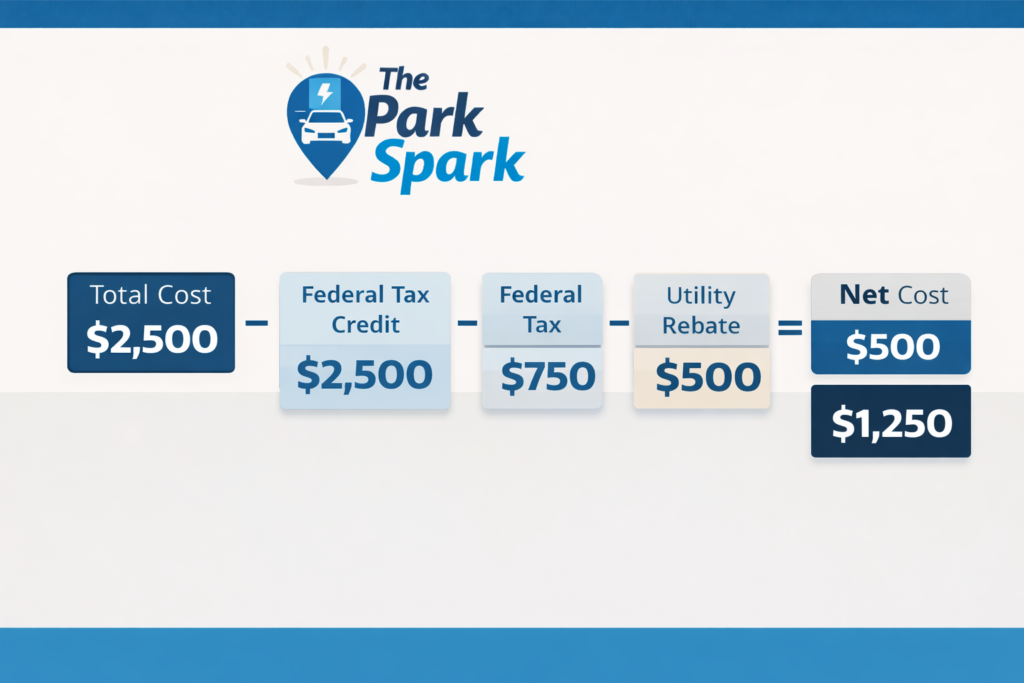
Federal, state, and utility rebates can dramatically reduce your net cost. The U.S. federal tax credit covers 30% of equipment and installation costs (up to 1,000)forresidential∗∗evchargingstations∗∗.Manyutilitiesofferadditionalrebatesof500–$1,500; some even cover installation entirely if you enroll in a managed charging program. Emporia Power’s Energy Hub system often qualifies for enhanced utility rebates because it integrates with whole-home energy management. Always check the Database of State Incentives for Renewables & Efficiency (DSIRE) before purchasing ev charging stations—the savings can be substantial.
Total Cost Scenarios: Real-World Examples
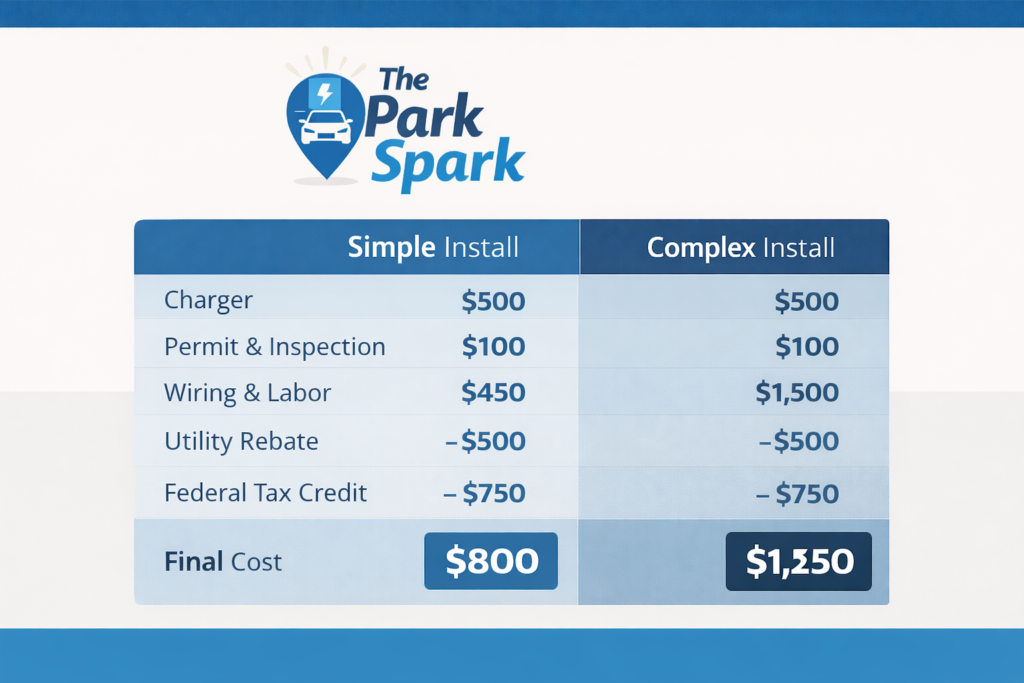
Scenario 1: Simple Garage Installation
- EVIQO Level 2 charger: $450
- Electrician labor (plug-in, 10-foot run): $400
- NEMA 14-50 outlet and materials: $150
- EV Bandit cable management: $50
- Permit: $75
- **Total: 1,125∗∗(or788 after 30% federal credit)
Scenario 2: Complex Installation with Panel Upgrade
- Emporia Power smart charger: $550
- Panel upgrade to 200 amps: $2,000
- Electrician labor (hardwired, 50-foot run): $1,200
- EVject safety disconnect: $250
- Permit and inspection: $125
- **Total: 4,125∗∗(or2,888 after credit)
Long-Term Value Over Upfront Cost
Cheaper ev charging stations may save money initially but can cost more over time. Look for units with at least a 3-year warranty; Emporia Power, Lectron, and EVIQO all offer robust warranties and U.S.-based customer support. Smart features like energy monitoring and load management prevent costly electrical upgrades and reduce charging costs by scheduling during off-peak hours. A 500chargerthatlasts10yearsischeaperthana300 charger that fails after two years and needs replacement.
Network Coverage & Accessibility
When you’re away from home, the value of ev charging stations depends entirely on whether you can find one where and when you need it. Network coverage and accessibility determine how easily you can charge during road trips, at work, or while running errands. Understanding the different networks and how to access them is critical for seamless EV ownership.
Major Public Charging Networks
Several companies operate nationwide networks of public ev charging stations. ChargePoint has the largest number of locations, with over 30,000 ports at shopping centers, workplaces, and hotels—most are Level 2 chargers. Electrify America and EVgo focus on DC fast charging along highways, ideal for long-distance travel. Tesla’s Supercharger network remains the most reliable for fast charging, though it’s opening to non-Tesla vehicles at select locations. Each network uses its own app for payment and station location, which means managing multiple accounts is often necessary.
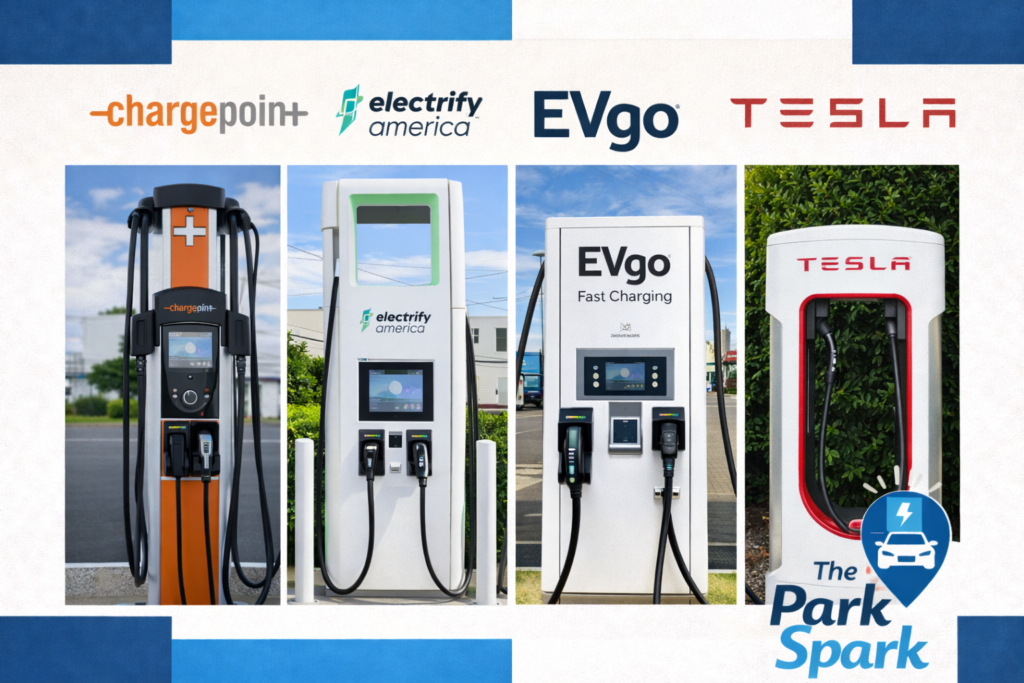
Geographic Coverage: Urban vs. Rural Gaps
Network density varies dramatically by region. Major metro areas often have dozens of ev charging stations within a few miles, while rural stretches of highway may have 50–100 miles between DC fast chargers. Before buying an EV, check coverage maps along your regular routes. If you live in a rural area, home charging becomes even more critical. Emporia Power and EVIQO offer robust Level 2 ev charging stations that ensure you start each day with a full battery, reducing dependence on sparse public infrastructure.
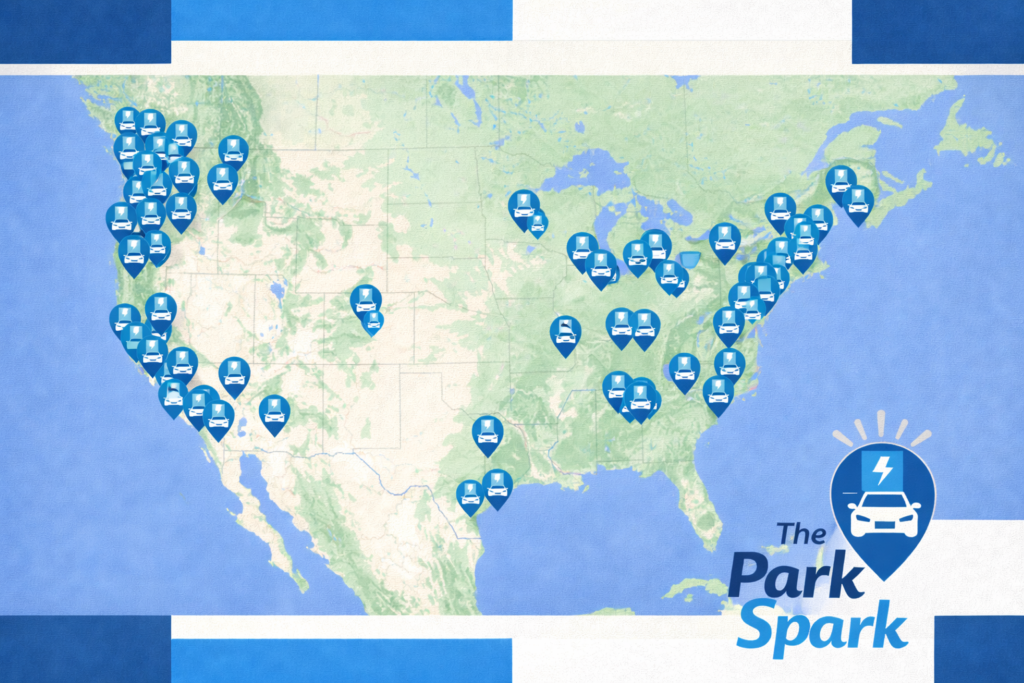
Roaming Agreements: One Account, Multiple Networks
To simplify access, many networks now have roaming agreements. For example, EVgo subscribers can use ChargePoint ev charging stations without creating a new account, and vice versa. Tesla’s Magic Dock adapters at select Superchargers allow CCS-equipped vehicles to charge using the Tesla app. However, roaming coverage is inconsistent, and pricing may be higher than direct network rates. Always verify roaming availability in your area through each network’s app.
Adapters: Your Ticket to Any Network
Your EV’s native connector may not match every public station. This is where adapters become essential. Lectron and EV Bandit manufacture a wide range of adapters that let you access virtually any ev charging stations: J1772-to-Tesla for Level 2 charging at hotels, CCS-to-Tesla for DC fast charging on road trips, and NACS-to-J1772 for non-Tesla EVs using Tesla Destination Chargers. Carrying a small adapter kit in your trunk ensures you’re never locked out of a charging opportunity.
Mobile Apps and Payment Methods
Every network requires its own app, which can clutter your phone. The apps show real-time station availability, pricing, and charging speed. Most accept credit cards, but some older ev charging stations only work with network RFID cards. Lectron offers a universal charging card that works across multiple networks, simplifying payment. For frequent travelers, signing up for three or four major networks and pre-loading payment methods eliminates fumbling with apps when you’re low on battery.
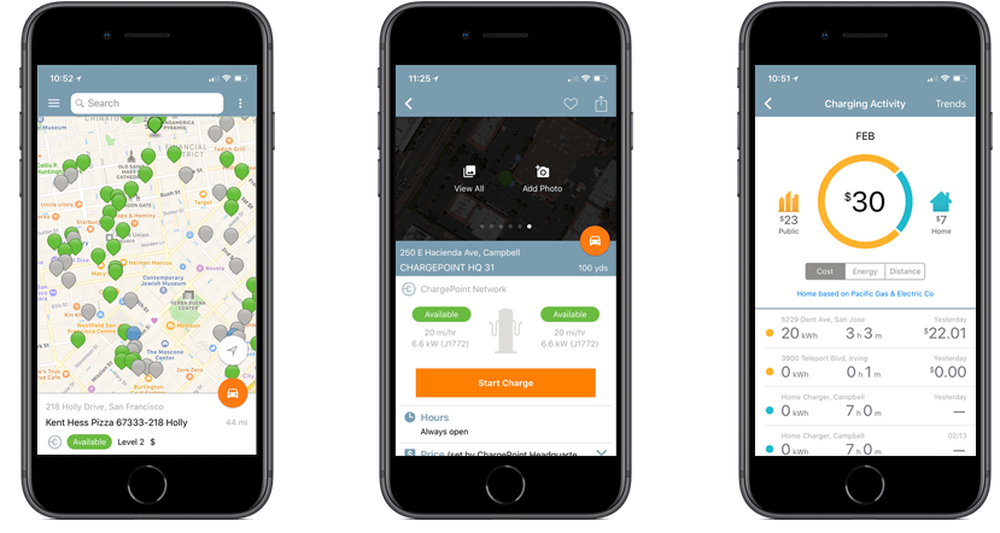
Real-Time Availability and Reliability
A station on the map isn’t always usable. Ev charging stations can be occupied, out of service, or experiencing slow speeds due to equipment issues. Apps typically show real-time status, but accuracy varies. User reviews in apps like PlugShare often reveal chronic problems at specific locations. For critical trips, identify backup ev charging stations within 20–30 miles of your primary stop. EV Bandit’s portable cable organizers make it easy to quickly stow your gear and move to a backup station without hassle.
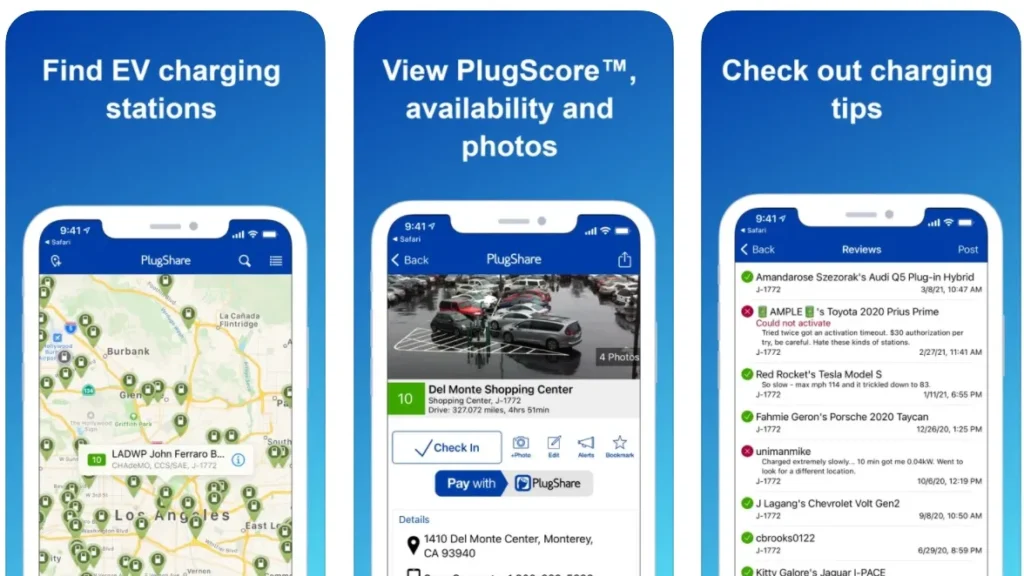
Planning Road Trips: Strategic Charging
Long trips require planning stops around DC fast charging ev charging stations. Tools like A Better Route Planner (ABRP) and in-car navigation systems calculate optimal charging stops based on your EV’s efficiency and charger locations. Build in buffer time—charging speeds slow as the battery fills, so planning shorter, more frequent stops is often faster than one long charge. When staying overnight, book hotels with Level 2 ev charging stations; brands like Hilton and Marriott increasingly offer them. If the hotel only has Tesla Destination Chargers, a Lectron or EVIQO NACS-to-J1772 adapter lets non-Tesla EVs charge overnight.
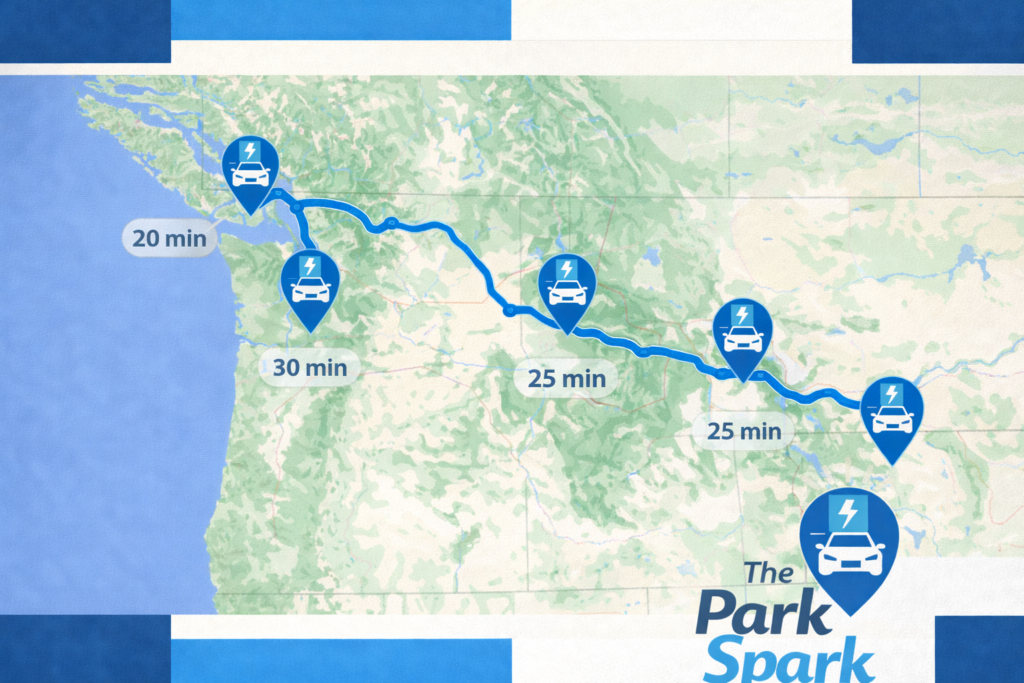
Home and Public Charging: A Combined Strategy
The best EV ownership experience blends reliable home charging with strategic public network use. A smart Level 2 station from Emporia Power or EVIQO handles 90% of your charging needs at the lowest cost per kWh. Public ev charging stations serve as a supplement for long trips or occasional top-offs. This combination minimizes range anxiety and maximizes convenience.
Safety and Security at Public Stations
Public ev charging stations are vulnerable to cable theft and vandalism. EVject’s emergency disconnect device adds a security layer, allowing your car to safely separate from the charger if someone tampers with the cable. Additionally, always lock your car while charging, and avoid leaving it unattended at unsecured locations for extended periods. Using EV Bandit’s cable lock prevents theft of portable adapters and cables left in your trunk.
Cable Length & Portability
The cable on your ev charging stations can make the difference between a seamless charging experience and daily frustration. Whether you’re pulling into your garage at an awkward angle or need a portable solution for road trips, cable length and station portability are practical factors that directly impact convenience.
Standard Cable Lengths: What to Expect
Most Level 2 ev charging stations come with 18 to 25 feet of cable. Eighteen feet works if your charging port is close to where you park, but 25 feet provides flexibility for driveways, two-car garages, or when you need to reach around obstacles. Emporia Power and EVIQO both offer 24-foot cables on their Level 2 stations, giving you enough reach to charge two EVs parked side-by-side with one unit. Lectron provides even longer 25-foot cables on some models, ideal for tricky parking layouts.
Wall-Mounted vs. Portable Stations: Permanent vs. Flexible
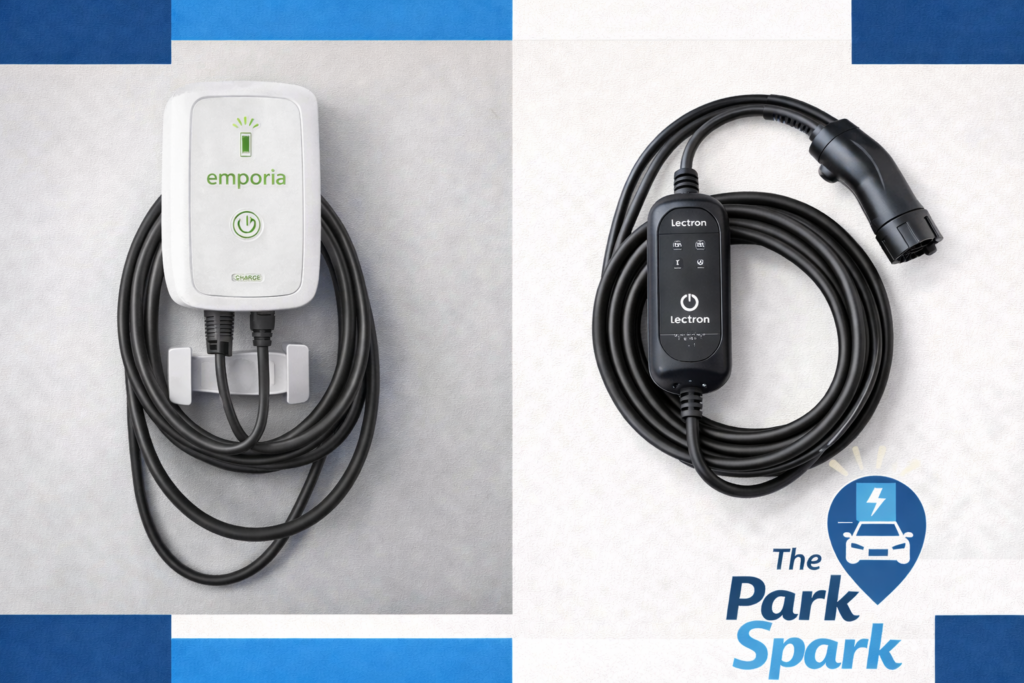
Wall-mounted ev charging stations are fixed in place and wired directly to your electrical panel (hardwired) or plugged into a NEMA outlet. They offer a clean, permanent solution with cable holsters that keep things tidy. Emporia Power and EVIQO excel here, with robust wall mounts and integrated cable management. Portable ev charging stations, often from Lectron, plug into standard 240V outlets (NEMA 14-50) and can be unplugged and stored when not needed. This flexibility is valuable if you rent, plan to move, or want to share the charger between multiple locations.
Image suggestion: Side-by-side photos—a wall-mounted Emporia Power station with a cable holster vs. a portable Lectron unit unplugged and coiled for storage.
Installation Location and Cable Routing
Where you mount your ev charging stations depends on cable length and parking habits. If you always back into your garage, mount the station near the rear wall. If you pull in forward, a side-wall position works better. For outdoor installations, ensure the cable can reach your car without lying across a walkway. EV Bandit sells cable management kits with wall clips and protective conduit that let you route cables neatly along walls or ceilings, maximizing reach while minimizing tripping hazards.
Portable Chargers for Travel
Not all charging happens at home. A portable Level 1 or Level 2 charger from Lectron fits in your trunk and provides peace of mind on road trips. These lightweight ev charging stations can plug into RV parks, campgrounds, or even a generous friend’s dryer outlet (with permission). For maximum versatility, Lectron offers dual-voltage chargers that automatically detect 120V or 240V outlets, adjusting charge speed accordingly. Pair this with EV Bandit’s compact cable organizer to keep the cord tangle-free in your cargo area.
Cable Gauge and Charging Speed
Thicker cables handle higher amperage with less heat. A 48-amp ev charging stations requires heavier 6-gauge wire, making the cable stiffer and harder to coil. EVIQO and Emporia Power use high-quality, flexible cable jackets that remain pliable in cold weather. If you struggle with stiff cables, consider a wall-mounted cable reel or a EV Bandit swing-arm holder that supports the weight and makes connecting and disconnecting effortless.
Weather Resistance for Outdoor Cables
If your ev charging stations are installed outdoors, the cable must withstand UV rays, rain, and temperature swings. Look for cables rated for outdoor use with durable, weather-resistant jackets. EVIQO’s outdoor-rated stations include UV-stabilized cables that won’t crack in direct sunlight. EV Bandit’s weatherproof cable holsters protect connectors from rain and dirt when not in use, extending cable life and ensuring safe operation.
Safety: Cable Damage and Emergency Disconnects
Frequent flexing, driving over cables, or yanking them from the car can cause internal damage, creating a fire risk. Inspect your cable monthly for cuts or fraying. For added safety, EVject’s emergency disconnect device installs between your cable and vehicle, instantly separating the connection if excessive force is applied. This protects your car’s charge port, the cable, and the ev charging stations itself from costly damage.
Extension Cables: Use With Caution
Technically, you can buy extension cables for EV charging, but they must be heavy-duty, properly rated, and kept as short as possible. Lectron sells UL-listed extension cables specifically designed for ev charging stations, but most manufacturers advise against them due to voltage drop and overheating risks. If you must use an extension, keep it under 25 feet and ensure it matches your charger’s amperage rating. The safest approach is to invest in a station with a longer native cable from the start.
Energy Management Options
Modern ev charging stations do more than deliver power—they can intelligently manage when and how your EV charges to save money, reduce strain on your electrical system, and maximize the use of clean energy. These smart features transform a simple charger into a powerful energy management tool.
Load Balancing: Avoid Overloading Your Panel
If your home has limited electrical capacity, charging your EV while running the dryer, air conditioner, and oven can trip your main breaker. Smart ev charging stations like those from Emporia Power automatically monitor your home’s total power draw and dynamically adjust charging speed to stay within safe limits. For example, when your electric water heater kicks on, the charger reduces from 48 amps to 24 amps, then ramps back up when the load drops. This prevents costly panel upgrades and ensures safe operation without manual intervention. EVIQO also offers load-balancing ev charging stations that integrate with your breaker panel via current transformers (CT clamps) for real-time monitoring.
Time-of-Use Scheduling: Charge When Rates Are Lowest
Utility companies often charge less for electricity during off-peak hours (typically 11 PM to 7 AM). Smart ev charging stations let you schedule charging automatically. Using the Emporia Power app, you can set your EV to charge only when rates drop below a certain threshold, saving 30–50% on charging costs compared to daytime rates. Lectron’s Wi-Fi-enabled ev charging stations offer similar scheduling through their mobile app, allowing you to simply plug in when you get home and let the system wait for cheap power. This feature alone can pay for the charger within two years.
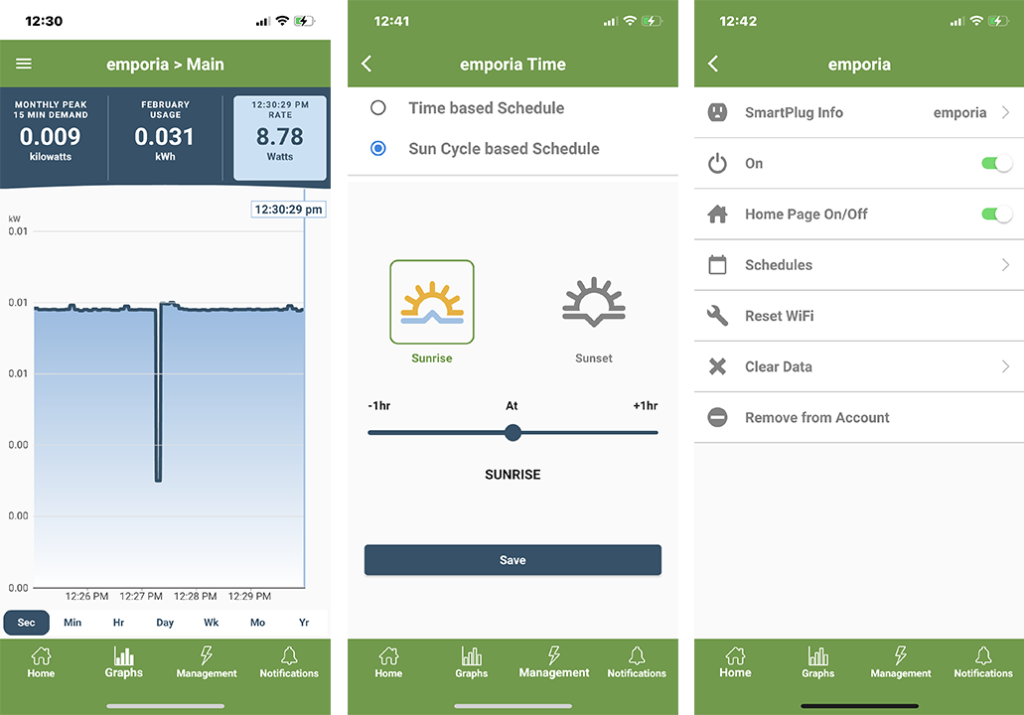
Solar Integration: Power Your Car with Sunshine
If you have rooftop solar panels, you can program your ev charging stations to charge only when excess solar energy is being produced. This ensures your EV runs on 100% clean power and avoids drawing from the grid. Emporia Power’s Vue energy management system tracks solar generation in real-time and directs surplus power to your EV, pausing charging when a cloud passes and resuming when generation peaks. EVIQO chargers also support solar divert modes, making them ideal for off-grid or hybrid solar setups. Without this feature, you might export cheap solar to the grid during the day and buy expensive power at night to charge your car.
Whole-Home Energy Monitoring: See the Full Picture
The most advanced ev charging stations don’t operate in isolation—they integrate with whole-home energy monitors. Emporia Power leads this category, pairing its charger with the Emporia Vue system that tracks every circuit in your panel. You can see exactly how much energy your EV uses versus your HVAC, water heater, and appliances. This data helps identify inefficiencies and optimize charging schedules. EVIQO is expanding into this space with compatible CT sensors that provide similar insights, giving you granular control over your energy bills.
Utility Demand Response Programs: Get Paid to Slow Down
Many utilities offer demand response programs that pay you to reduce energy usage during grid emergencies. Smart ev charging stations can automatically participate. For example, on a hot summer afternoon when the grid is strained, your charger receives a signal to pause for two hours, and you earn a 50–100 annual credit. Emporia Power is actively partnering with utilities to enable this feature, making their ev charging stations eligible for these incentive programs. Check with your utility provider to see if they support managed charging rebates.
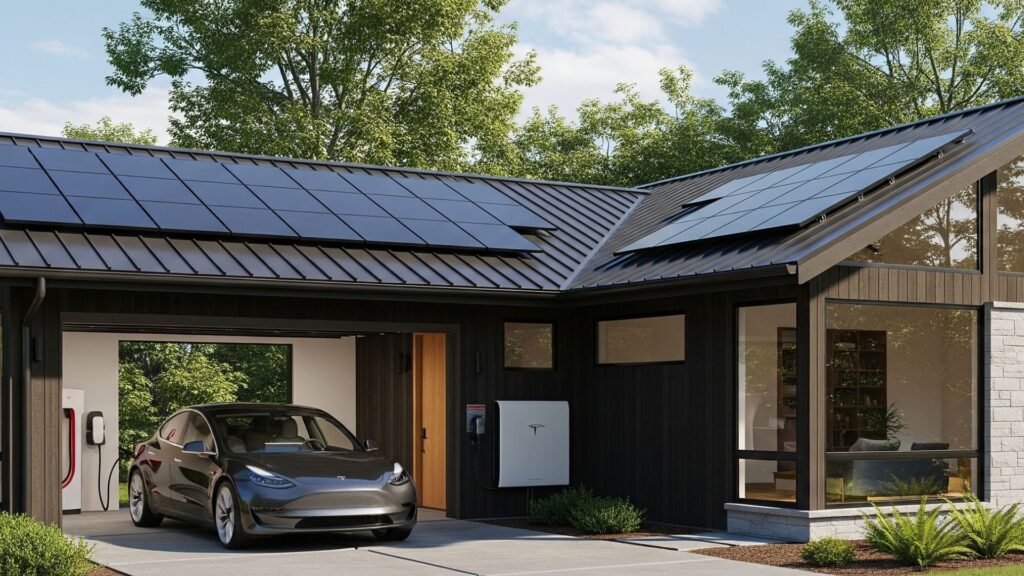
Battery Storage Integration: Maximize Your Powerwall
If you have a home battery like a Tesla Powerwall or LG Chem, your ev charging stations can be configured to charge your car from the battery during peak rate hours or outages. This setup ensures your EV is always ready, even during blackouts. Emporia Power’s system can prioritize keeping the lights on while allocating spare battery capacity to charge your EV overnight. While Lectron and EVIQO chargers don’t directly manage batteries, they can be scheduled to operate when your battery management system signals available capacity.
Choosing the Right Energy Management Features
For most homeowners, a smart Level 2 ev charging stations with time-of-use scheduling and basic load balancing provides the best ROI. Emporia Power and EVIQO deliver these features at competitive prices. If you have solar or are planning a panel upgrade, invest in a system with full energy monitoring. For renters or those wanting a portable solution, Lectron’s smart chargers offer scheduling features without requiring hardwired installation. Regardless of your setup, adding EVject’s safety disconnect ensures your energy management system protects your vehicle from unexpected power surges or grid events.
Warranty & Customer Support
A strong warranty and responsive customer support can turn a frustrating experience with ev charging stations into a minor inconvenience. Before buying, scrutinize the warranty terms and research the manufacturer’s reputation for service—this protects your investment long after the initial purchase.
Standard Warranty Length: What’s Typical
Most Level 2 ev charging stations come with a 3-year warranty covering defects in materials and workmanship. Emporia Power and EVIQO both offer 3-year warranties on their smart chargers, while Lectron provides a 2-year warranty on most units (with extended options available). Premium brands may stretch to 5 years, but the extra cost rarely justifies the marginal coverage improvement. For home use, a 3-year warranty is the industry sweet spot—long enough to catch manufacturing defects but short enough to keep prices reasonable.
What’s Covered vs. What’s Not
Warranties for ev charging stations typically cover the main unit, internal electronics, and the charging cable. However, they exclude damage from improper installation, power surges, lightning strikes, or physical abuse. If you install the charger yourself and fail to meet local electrical codes, the manufacturer may deny your claim. This is why professional installation is critical—it ensures warranty validity. Emporia Power explicitly states that their warranty requires installation by a licensed electrician, a common condition across most ev charging stations.
Customer Support Channels: How to Get Help
When ev charging stations malfunction, you need fast answers. Look for manufacturers offering multiple support channels: phone, email, and live chat. Emporia Power provides U.S.-based phone support with sub-10-minute wait times during business hours, plus a robust online knowledge base. Lectron offers email and chat support, though response times can be 24–48 hours. EVIQO is building its support infrastructure, currently offering email and a community forum. Before buying, test the support line—call and ask a simple question to gauge responsiveness.
Installation and Warranty Registration
Most ev charging stations require online registration within 30 days of purchase to activate the warranty. You’ll need to upload your receipt and installation certificate from a licensed electrician. EV Bandit’s accessories (cable management, adapters) also carry warranties, but they’re typically shorter—usually 1 year. Keep all documentation in a folder; you’ll need it if something fails. EVject’s safety devices come with a 2-year warranty that also requires professional installation for coverage.
Return Policies: The First Line of Defense
Before the warranty kicks in, you have the return policy. Most retailers (Amazon, Home Depot) allow returns within 30 days for unopened ev charging stations. If you install and use the unit, returns are rarely accepted unless the product is defective. Lectron and Emporia Power both sell directly on Amazon with hassle-free return policies, giving you an extra layer of protection if the charger doesn’t meet your expectations out of the box.
Extended Warranties: Are They Worth It?
Third-party extended warranties for ev charging stations are generally poor value. They cost 50–150 and often duplicate coverage already provided by credit card purchase protection or retailer policies. Instead of buying an extended warranty, invest that money in a higher-quality charger from a reputable brand like Emporia Power or EVIQO with a solid 3-year warranty. If you want extra peace of mind, use a credit card that extends manufacturer warranties by an additional year.
Reputation Matters: Research Before You Buy
A warranty is only as good as the company behind it. Emporia Power has built a strong reputation for honoring warranty claims quickly, often shipping replacement units within a week. Lectron has a large user base and generally positive reviews, though some customers report slow responses for complex issues. EVIQO is newer but gaining traction for responsive support. Check recent reviews on Reddit, Amazon, and EV forums before committing. A company that denies claims or ghosts customers isn’t worth the savings.
Making a Warranty Claim: The Process
If your ev charging stations fail, contact support first—they may resolve the issue remotely via firmware update. If hardware replacement is needed, you’ll ship the unit back (usually at manufacturer’s expense) and receive a refurbished or new unit. Emporia Power and Lectron both provide prepaid shipping labels for defective units under warranty. Document everything: photos of the issue, support ticket numbers, and shipping receipts. The process typically takes 7–14 days from claim to replacement.
Support for Accessories and Adapters
Adapters and accessories from EV Bandit and EVject also carry warranties, but they’re shorter—typically 1 year. These items are more prone to wear because they’re handled frequently. EV Bandit offers a no-questions-asked replacement policy for defective adapters within the warranty period. EVject’s safety devices are built to last but include a 2-year warranty that covers mechanical failure. Keep receipts for these smaller purchases; they’re easy to lose but essential for claims.
Incentives & Rebates Eligibility
Installing ev charging stations at home can cost 1,000–4,000, but federal, state, and utility incentives can slash that by 30–50%. Understanding what’s available and how to qualify ensures you don’t leave money on the table.
Federal Tax Credit: The 30% Break
The U.S. federal Alternative Fuel Vehicle Refueling Property Credit covers 30% of equipment and installation costs for residential ev charging stations, up to $1,000. This includes the charger, electrical work, permits, and even accessories like EV Bandit cable management or EVject safety devices if installed as part of the project. To qualify, the ev charging stations must be installed at your primary residence and be new (not used). You claim the credit using IRS Form 8911 when filing taxes. Emporia Power, Lectron, and EVIQO chargers all qualify, as do their installation accessories.
State and Local Rebates: Free Money
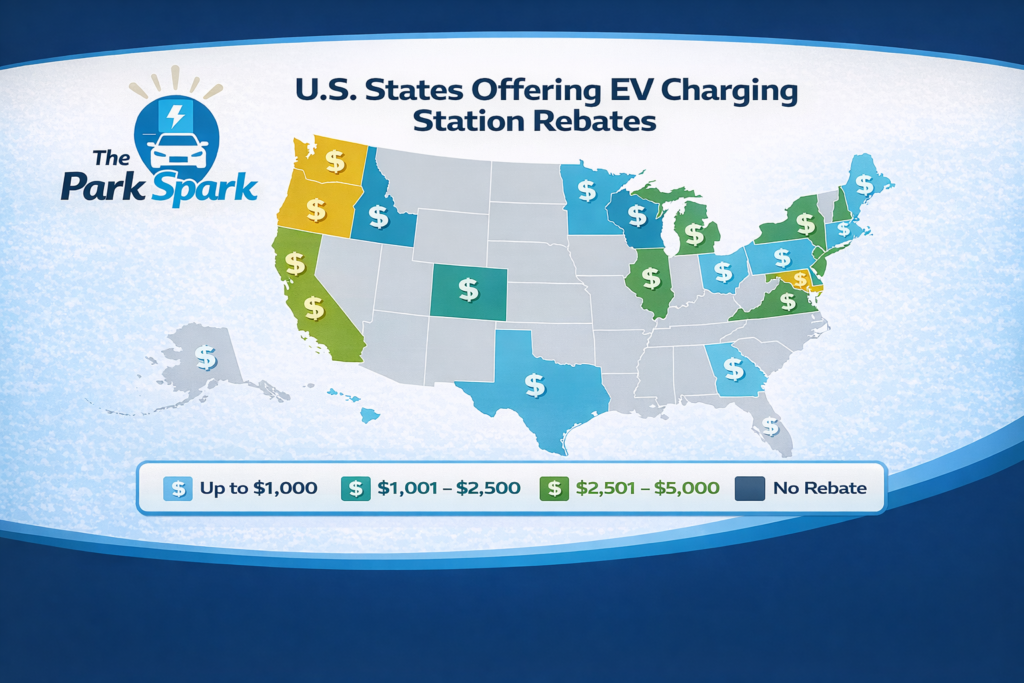
Many states offer additional rebates for ev charging stations. California’s Clean Vehicle Rebate Project (CVRP) offers up to 2,000forlow−incomehouseholds.NewYork’sChargeReadyprogramrebatesupto4,000 per port for multifamily buildings. Colorado, Massachusetts, and Oregon have similar programs ranging from 500to1,500. Check your state’s energy office website or the Database of State Incentives for Renewables & Efficiency (DSIRE). Some local municipalities also offer perks—Austin, TX, for example, rebates $1,200 for Level 2 ev charging stations. Lectron and EVIQO both maintain up-to-date rebate guides on their websites, listing which programs their chargers qualify for.
Utility Company Programs: Cash and Bill Credits
Utility incentives are often the most generous. Pacific Gas & Electric (PG&E) rebates up to 500forresidential∗∗evchargingstations∗∗andoffersa50 annual bill credit for enrolling in a managed charging program. Southern California Edison (SCE) provides rebates up to 1,000forqualifyingchargers.Manyutilitiesalsooffertime−of−use(TOU)ratesthatdropelectricitycoststo0.10–$0.15 per kWh overnight—saving hundreds annually. Emporia Power’s smart ev charging stations are certified for most utility demand response programs, making them eligible for enhanced rebates. Lectron Wi-Fi chargers also qualify for many TOU rate plans.
Qualification Requirements: The Fine Print
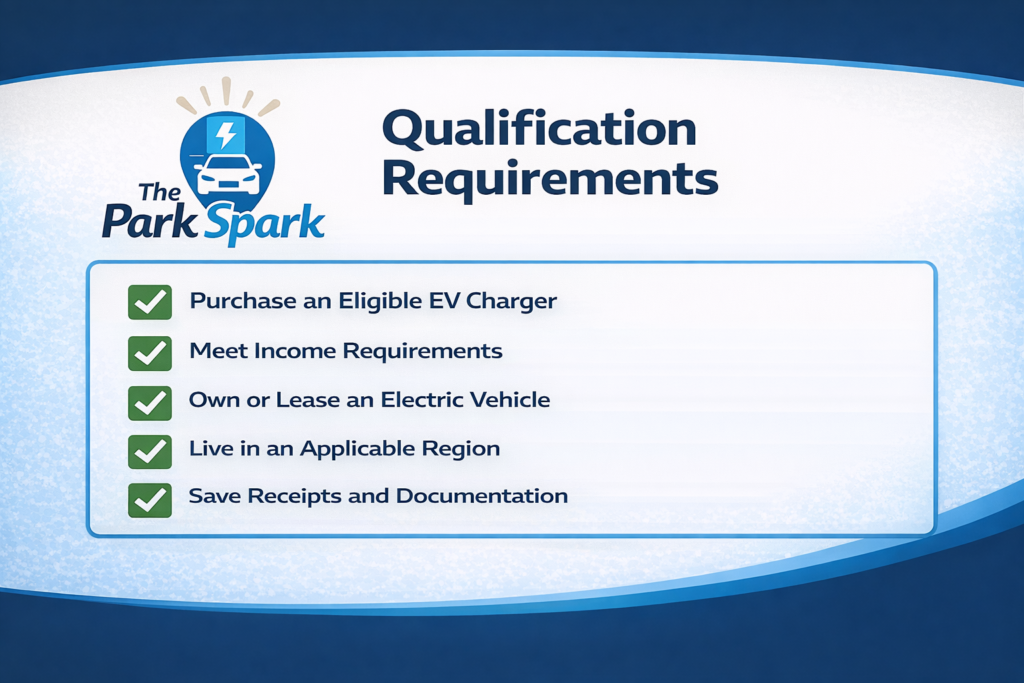
To qualify for rebates, ev charging stations must meet specific criteria:
- UL Listed: The charger must be safety-certified. All Emporia Power, Lectron, EVIQO, and EV Bandit chargers are UL listed.
- Wi-Fi Enabled: Many rebates require smart charging features. Emporia Power and EVIQO meet this standard.
- Professional Installation: Most programs require a licensed electrician. Keep your installation certificate.
- Primary Residence: Federal and most state rebates only apply to your main home, not rental properties.
- New Equipment: Used or refurbished ev charging stations don’t qualify.
Application Process: Step-by-Step
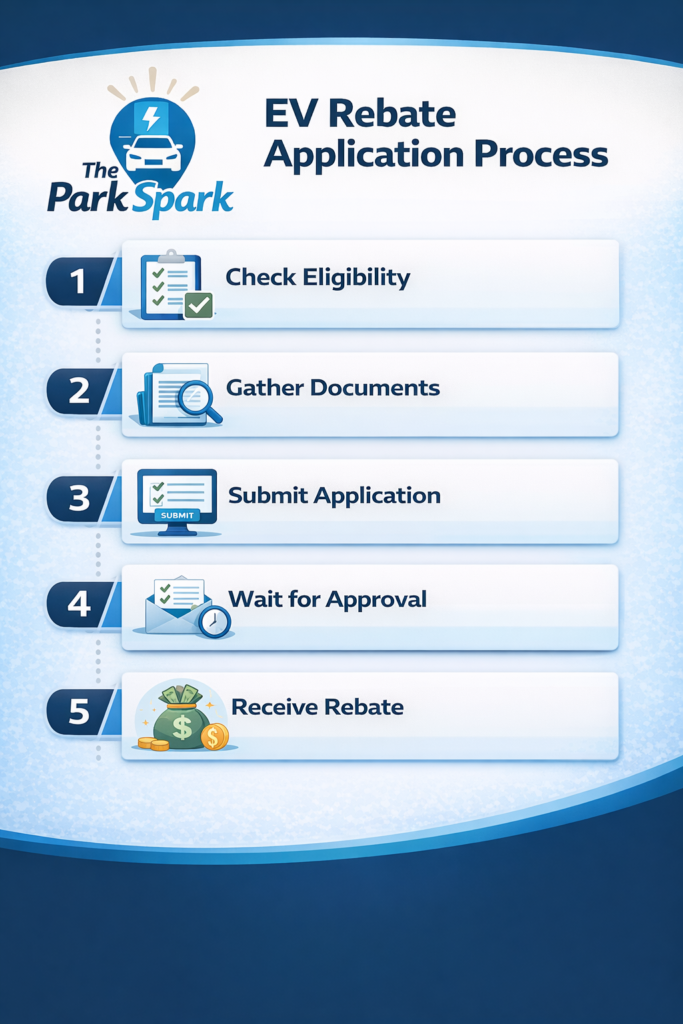
- Purchase and Install: Buy qualifying ev charging stations from Emporia Power, Lectron, or EVIQO and have them professionally installed.
- Gather Documents: Save receipts, installation certificate, permit, and photos of the installed charger.
- Register: Create an account on your utility or state rebate portal.
- Submit: Upload documents and complete the application. Processing takes 4–8 weeks.
- Receive Payment: Rebates arrive as a check or direct deposit. Federal credit is claimed at tax time.
Product-Specific Eligibility
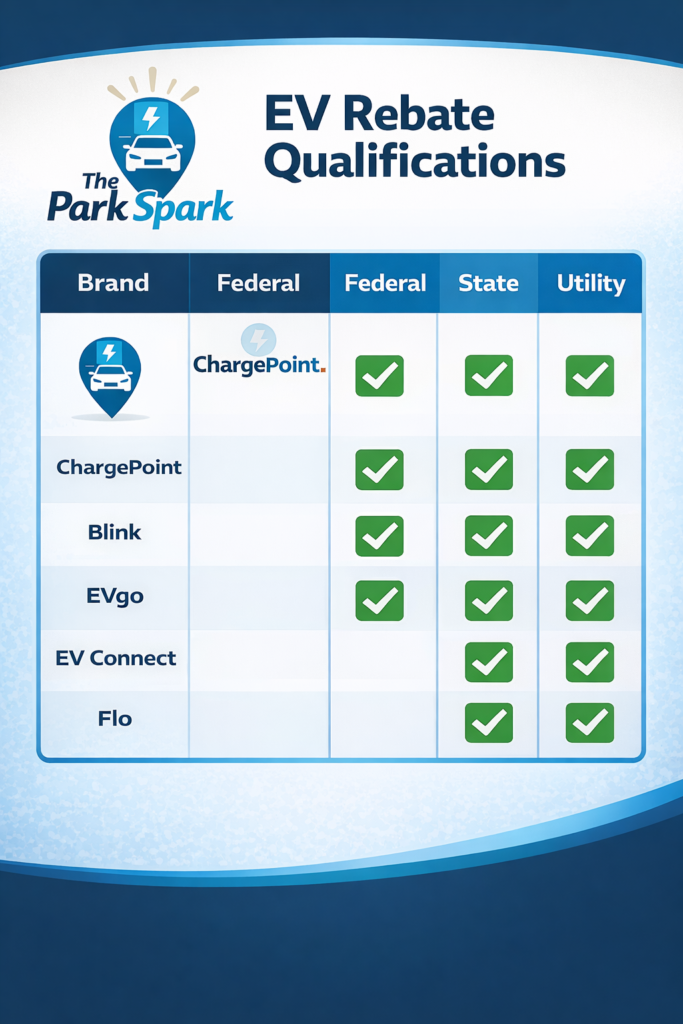
- Emporia Power: Qualifies for federal, most state, and utility rebates. Their Energy Hub integration often unlocks additional utility incentives.
- Lectron: UL-listed and Wi-Fi-enabled models qualify for federal and most state programs. Their portable chargers may not qualify for installation rebates but are eligible for equipment-only incentives.
- EVIQO: Meets federal and state requirements. Their smart features make them eligible for utility managed charging programs.
- EV Bandit accessories: Cable management and adapters are typically covered under installation costs if purchased and installed with the charger.
- EVject safety devices: Can be included in the total installation cost for federal credit eligibility.
Maximizing Your Savings: Stack Incentives
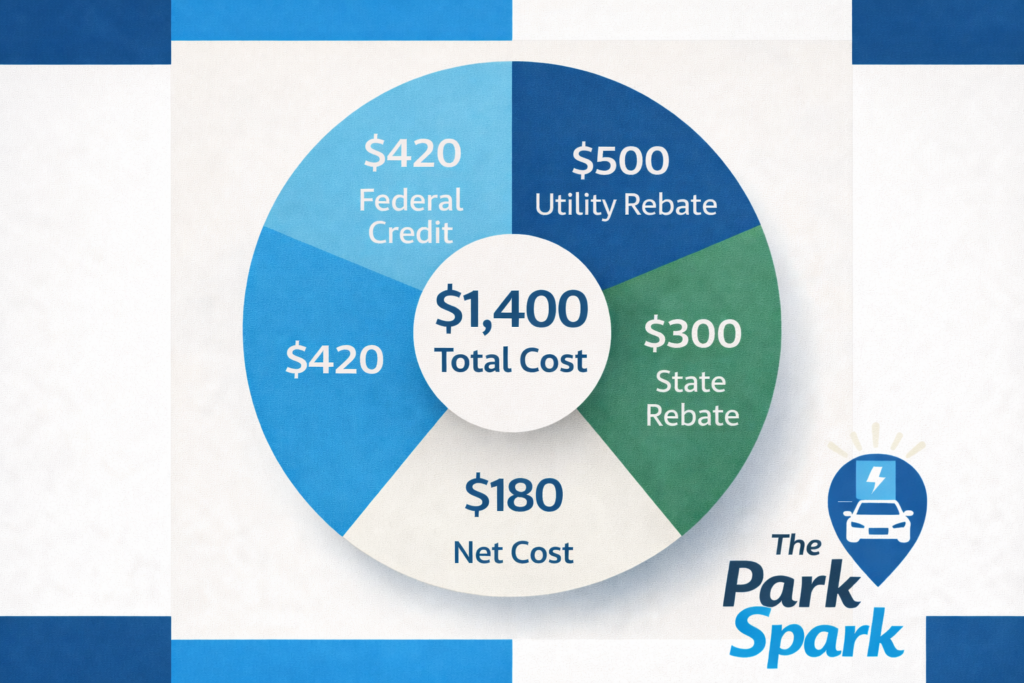
You can combine incentives. For example, a 600∗∗EmporiaPower∗∗chargerwith800 installation costs 1,400total.The30420. If your utility rebates 500andyourstateoffers300, your net cost drops to just $180. Always apply for utility and state rebates first, then claim the federal credit at tax time. Some utilities require pre-approval before installation, so check deadlines early.
Deadlines and Program Changes
Incentive programs change frequently. The federal credit is currently authorized through 2032, but state and utility programs often have annual funding caps that run out mid-year. Apply as soon as your ev charging stations are installed. Bookmark your utility’s EV page and sign up for alerts. Lectron and Emporia Power both email customers about new rebate opportunities in their area, helping you stay informed.
Conclusion/Summary
Write a conclusion or short summary including thSelecting the right ev charging stations for your needs doesn’t have to be overwhelming. By comparing charging speeds, connector compatibility, installation requirements, and smart features, you can find a solution that fits your budget and lifestyle. For most homeowners, a Level 2 charger from Emporia Power, Lectron, or EVIQO offers the best balance of speed, features, and value. Pair it with quality accessories from EV Bandit and safety devices from EVject to create a complete charging setup. Remember to check available federal, state, and utility incentives before purchasing—these rebates can cut your total cost by 30–50%. With the right ev charging stations installed, you’ll enjoy convenient, affordable charging for years to come.e main takeaways of your article. (Paragraph)
Stay updated by joining our Newsletter